Showing posts with label journalism. Show all posts

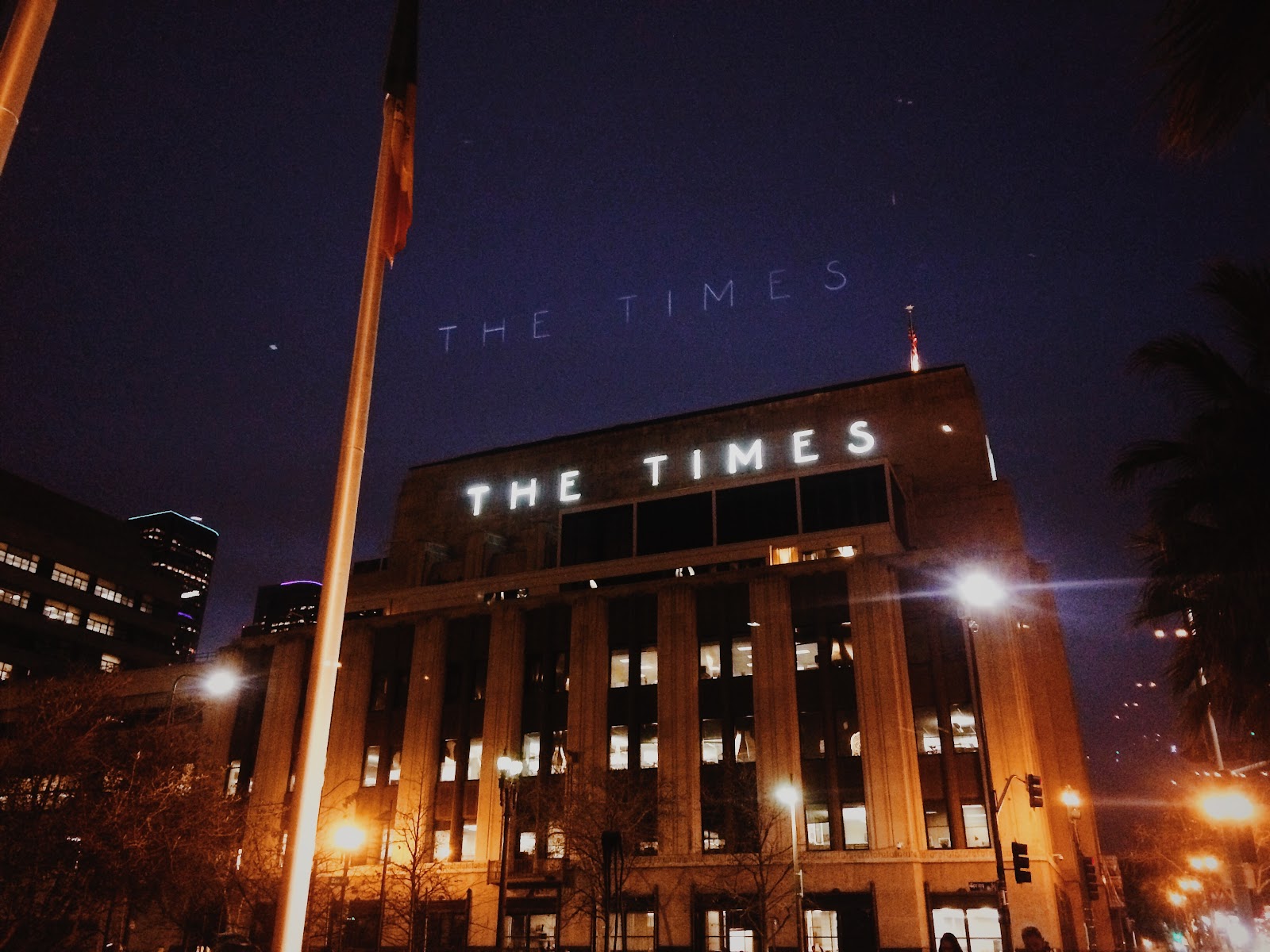
Ask the newsroom: 7 editors and reporters from The Los Angeles Times share tips for young journalists

IMG_3070.jpg
By Tessa Weinberg

We asked the question, “In the increasingly digital and changing landscape journalism finds itself in, what advice do you have for young people entering the industry?”


5 tips on creating your website portfolio


Photo courtesy of Flickr user India7 Network

By Kelsey Castulik 


So you’ve spent endless hours on creating some content.  Whether it be for an internship, summer class or as freelance, you want to display all your work as a growing professional. Where can you show off the effort you put in? An online portfolio.


3 Podcasts that Highlight Marginalized Voices

Photo courtesy of Flickr user Patrick Breitenbach
By Abby Ivory-Ganja

I love podcasts. Seriously, I could babble about them for days. One time our Membership Development Chair, Casey, started talking about pizza rat, and I found a way to make it about podcasts. (But I think about this episode of Reply All so often.) One of my favorite things about podcasts is how they can tell stories from marginalized identities.


My week learning a new language: how to code


Photo courtesy of Flickr user Thibault J.
By Tessa Weinberg

Coding, HTML, CSS and JavaScript are just a few of the words that makes most traditional print journalists cringe. Just right-click and inspect the elements of any webpage and you can get a glimpse into the confusing strings of code that govern the site you’re using. One of the items on my summer bucket list is to grasp the basics of coding, in the hopes of one day building my own website. Over the course of a week I tried out two popular coding sites: Codecademy and Free Code Camp. Below I’ve included what I found to be some of the pros and cons of each as well as a little bit of what I learned along the way.

5 ways to build your best portfolio during your internship


Photo courtesy of Flickr user Anthony DiLaura 
By Rose McManus


The best part about having a summer internship is getting to create your own work outside of the classroom, and building a portfolio is the best way to showcase all of it. These 5 steps will help you create an impressive online portfolio to show your skills and wow future employers. 


3 things to do when you need a finals week break

Photo by Steven S. / Flickr
by Madison Feller

It's the very last week of the semester, and while we know you're busy plowing away at final projects, essays and exams, we also know that sometimes you just need a break. So if you're in the middle of a finals week panic, look no further. We've got three (journalism-focused) procrastination tools right here.

Three simple dos and don'ts for every Twitter user

By Maria Davison

Image by Jurgen Appelo
Everyone says that you should be using Twitter. And they’re probably right. Twitter is a great tool for doing journalism, for consuming journalism and for, like, knowing things about the world. But like most social media, there is a wrong way and a right way to use Twitter.


Do: Share articles that you find interesting
When I say interesting, I mean things that are actually interesting to you. Share content that actually deals with things you care about. I am a big art and history nerd and scrolling back through my Twitter, a lot of the things I share fall into those categories. Stories about Pompeii and Google Art Project and a long-lost Stradivarius are some recent personal favorites.

Journalists are in high demand ... at tech companies

By Sarah Darby
Photo courtesy of Flickr user Keiyac
June has been a big month for job openings in journalism, but not at the companies you might imagine.

In the midst of a new round of layoffs from legacy media company Dow Jones, Apple and Twitter have announced they will soon hire journalists to help run their news services.

What makes these announcements unique is the role journalists will soon play at the companies. Although many companies have former journalists on staff, this is one of the first times two tech-giants have expressed a need for journalists to, well, do journalism.

Journalism on your wrist

Courtesy of Flickr User Mark Johnson
By Katy Mersmann

A few weeks ago, Apple announced its newest products: two new iPhones and the Apple Watch. The iPhones really caught the most attention and now that they've been released to the public, coverage of the iPhone 6 and 6 Plus has been significant, especially with the advent of "Bendgate."

But recently, a classmate shared a blog post with me addressing the question of how the Apple Watch, and other wearable technology, will impact journalism. Mario García runs a tech blog called García Media, that looks at the intersection of journalism and technology, and he raises some interesting questions about whether wearable technology will push journalism even further into the world of "at a glance."

Four pieces of soccer journalism not by Ann Coulter (and two by Ann Coulter)


By Emerald O'Brien

Creative Commons photo from Flickr user daniandgeorge
Whether the completion of the World Cup on Sunday will bring you infinite joy or put you in a four-year depression (or maybe you stopped thinking about soccer altogether after last Tuesday), it is the last time many Americans will really think (or write) about soccer until 2018. 

That being said, I have thoroughly enjoyed watching both the World Cup and Americans yelling at each other about whether or not soccer is stupid while the rest of the world ignores us.

This year’s buzz began with Ann Coulter’s article condemning the sport and all who enjoy it. And while it is an...interesting (ahem, hilarious) read, here are some other things that happened in soccer journalism in the last month.


The Five Hardest Things About Journalism: No. 1

By Andrew Gibson


This is the fifth post in a series about what I think are the five most difficult parts of journalism. My opinions are based on one year at Mizzou in Columbia, Mo., and a summer internship at KCNC-TV in Denver.


Journalism decided to throw me in the fire last semester.

I had to write a story about teen pregnancy in my News (Journalism 2100) class. It’s a challenging and sensitive topic, especially for a 19-year-old male who had never reported before January.

Which takes me to challenge No. 1: sources.

Finding teen mothers who would talk took weeks and weeks of persistence. I called and emailed places all over Columbia — My Life, Planned Parenthood, Lutheran Family Services, Columbia Housing Authority, Rock Bridge High School and Douglass High School, to name a few — looking for someone who wasn’t intimidated by a notebook and voice recorder.

The Five Hardest Things About Journalism: No. 2

By Andrew Gibson


This is the fourth post in a series about what I think are the five most difficult parts of journalism. My opinions are based on one year at Mizzou in Columbia, Mo., and a summer internship at KCNC-TV in Denver.


People often shrink away in terror when I tell them my major is journalism. Following the shock, a common question is, What do you want to do with that?

My response usually has two parts. I say, ideally, I’d like to be a political columnist, but my realistic goal is simply to land a job.

Journalism has an uncertain future, and I can’t afford to be picky right now. I’ve accepted, and even embraced, that my first job will probably be a general-assignment reporter at a small news outlet.

That means I’ll need the skills to gather information about almost everything. If there’s a fire, my editor will likely give me the story. Is the local grocery store recalling its green onions? I’m on it.

Which takes me to challenge No. 2: Journalists have to know a little something about everything. Our job is to observe the world and then present it in a way that people can understand.


If we don’t get it, can we expect the same of our audience?
The Five Hardest Things About Journalism: No. 3

By Andrew Gibson


This is the third post in a series about what I think are the five most difficult parts of journalism. My opinions are based on one year at Mizzou in Columbia, Mo., and an internship this summer at KCNC-TV in Denver.

There’s a great irony in reporting.

Journalists are expected to dig into the depths of a story, examining every relevant angle, yet condense what they find into something readers can skim in minutes.

That’s challenge No. 3: judging what information is important. And doing so quickly.


I learned to use this reporting skill in News (Journalism 2100), and one experience called “man on the street” sticks out in my mind. Everyone in my class had to draw a story idea from a hat, gather background information, interview two people and write a 250- to 350-word story, all in 90 minutes.